Projects
Project 01
Coaching with the GROW Model
TYPE: Scenario-Based AI Conversation
TOOL(S): Mindsmith
PROBLEM
Managers at Gilbert’s Pharmacy conduct annual performance reviews with pharmacists and pharmacy technicians. However, many managers lacked a structured approach to coaching employees during these conversations.
Without a clear framework, discussions often focused on mistakes instead of improvement and did not encourage employees to take ownership of their development. Leadership wanted managers to use the GROW Coaching Model to guide more productive coaching conversations and support patient safety, prescription accuracy, and customer satisfaction.
SOLUTION
I designed a 10-minute AI conversation-based microlearning experience where managers practice coaching an employee using the GROW Coaching Model.
Learners take the role of a pharmacy manager conducting a performance review with a technician who has recently rushed through prescription preparation. Throughout the scenario, learners choose how to respond during the conversation and receive immediate feedback on their decisions.
This interactive practice helps managers learn how to guide employees toward reflection, problem-solving, and clear action plans.
DESIGN PROCESS
I used Action Mapping principles to design the learning experience around real workplace behaviors rather than information delivery.
First, I analyzed the business problem and identified the key performance goal: helping managers conduct more effective coaching conversations.
Next, I created a realistic scenario that walks learners through the four stages of the GROW Coaching Model: Goal, Reality, Options, and Way Forward.
Finally, I developed branching conversation interactions in MindSmith, allowing learners to practice making coaching decisions and receive feedback in a simulated performance-review conversation.

Project 02
Identifying the Business Goal Chat Practice
TYPE: Scenario-Based AI Conversation
TOOL(S): ChatGPT Agent
PROBLEM
Not every instructional designer has regular opportunities to practice needs analysis conversations with stakeholders. This made it harder to build confidence in asking strong discovery questions and identifying the true business need before recommending training.
SOLUTION
I created a scenario-based AI practice tool in ChatGPT that simulates a realistic stakeholder conversation. Learners practice asking questions, interpreting responses, and uncovering the business goal through dialogue instead of relying on a static checklist.
DESIGN PROCESS
I identified the key performance gap and then designed a scenario-based experience focused on practicing action-mapping conversations in context. I mapped the behaviors learners needed to demonstrate, built a custom GPT to act as the stakeholder, and refined the prompt through testing to improve realism and challenge.

Project 03
The ADDIE Process
TYPE: Explanatory Video
TOOL(S): Vyond
PROBLEM
The Learning & Talent Development (L&TD) team was receiving a high volume of internal training requests from departments across the business. While many of these requests began with similar questions and conversations, responding to each one required time from the team’s regular workflow. The team needed a more efficient way to communicate its process, set expectations, and streamline project intake.
SOLUTION
To help simplify the intake process, I developed a four-minute animated video that introduced clients to the ADDIE model and explained how the L&TD team approaches training requests. By giving stakeholders a clear overview of the team’s process upfront, the video helped them better understand how training solutions are developed and whether their request was the right fit. This reduced repetitive intake conversations, saved time for the L&TD Manager, and created a more efficient starting point for discussions with internal clients.
DESIGN PROCESS
I designed the video using the same ADDIE model featured in the content itself. I began by identifying the business need, target audience, and learning objectives for the project. From there, I created a storyboard outlining each scene and wrote the narration to ensure the content was clear, concise, and easy to follow. I then used Vyond to develop the animation and voice-over, focusing on creating a polished, engaging explanation of the process. Once the initial version was complete, I shared it with subject matter experts and stakeholders for feedback. I also piloted the video with ten department leads to gather additional input before making final revisions. After incorporating feedback, the finished video was uploaded to the L&TD SharePoint page to support future training intake conversations.
Project 04
Product Capability Process
TYPE: Interactive eLearning Course
TOOL(S): Articulate Storyline
PROBLEM
Employees needed a clear and accessible way to understand the company’s products, how they worked, and where they fit within the customer experience. Existing information was complex and not always easy to connect to real-world use, creating a need for learning that was both concise and practical.
SOLUTION
To address this need, I partnered with subject matter experts, product stakeholders, and cross-functional teams to create an interactive eLearning course focused on the company’s products and capabilities. The course guides learners through the process of opening a bank account with a financial services provider, highlighting which company products support each step along the way. It concludes with a customer using the company’s app to send and receive money, helping learners connect product knowledge to a realistic end-to-end experience. By combining key product information with storytelling, I created a course that made complex content easier to understand, more engaging, and more relevant for employees.
or you to tell a story and let your users know a little more about you.


Project 05
Compliance Course
TYPE: Interactive eLearning Course
TOOL(S): Articulate Storyline & Adobe Illustration
PROBLEM
The business needed to update its annual compliance training to reflect revised content while also reducing the amount of time employees spent completing required courses. The goal was to create a more efficient learning experience that maintained essential compliance information while lowering training time and associated costs.
SOLUTION
I partnered with subject matter experts to revise and streamline the annual compliance training curriculum, reducing the overall learning time by half. This saved each employee nearly two hours of required training time while still preserving the key information needed for compliance. Using the ADDIE model, I analyzed the learning requirements, redesigned the content for greater clarity and efficiency, developed the updated courses, and supported implementation and evaluation across the business.


Project 06
Customer Service Response
TYPE: Scenario-Based eLearning Course
TOOL(S): Articulate Storyline
PROBLEM
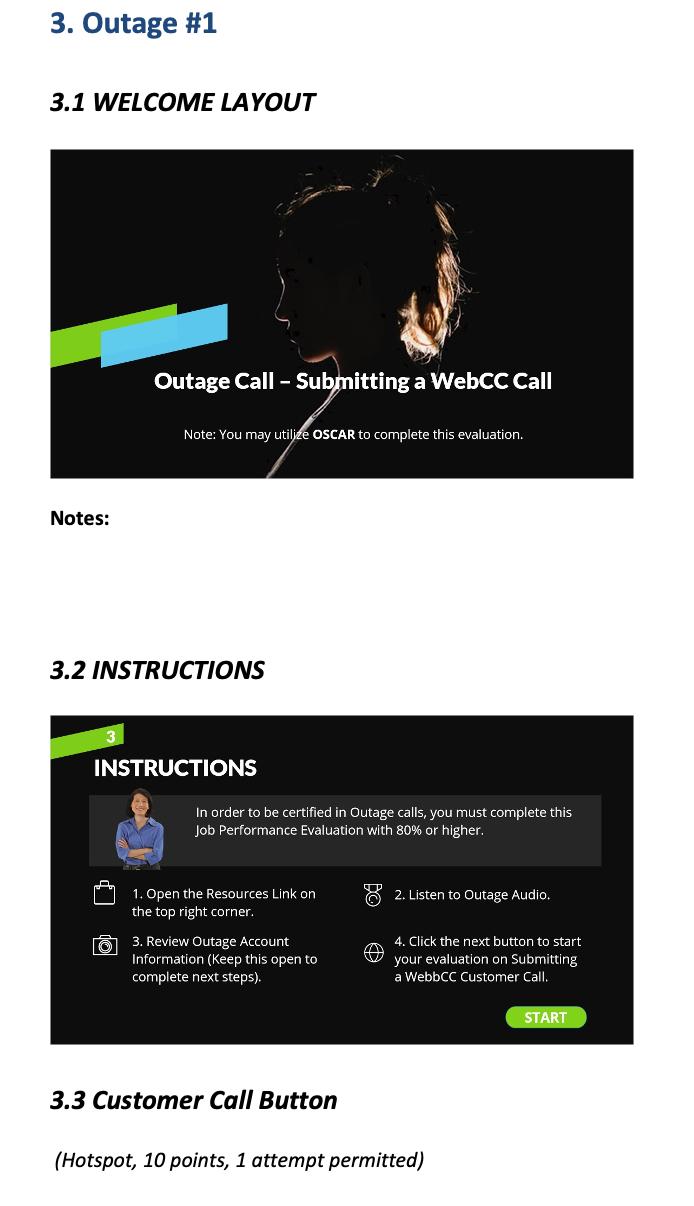
Newly hired Customer Service Representatives needed training on how to confidently handle common call types while also accurately documenting customer interactions in the company’s software system. The learning needed to prepare them for real on-the-job situations and build both communication and system-use skills.
SOLUTION
Working with subject matter experts and using the ADDIE model, I developed a scenario-based training experience that gave new CSRs hands-on practice with realistic call situations they were likely to encounter on the job. Learners were presented with customer scenarios and asked to determine how they would respond, while also practicing accurate documentation within the company’s system. To successfully complete the course, learners were required to demonstrate proficiency across the majority of scenarios, helping ensure they were better prepared for live customer interactions.



Project 07
How to Submit a Time Sheet
TYPE: Explanatory Video
TOOL(S): SAP EnableNow & Camtasia
PROBLEM
The business needed a quick and clear way to train contract workers on how to track and submit their time each week. Accurate time reporting was essential for monitoring project hours and ensuring clients were billed correctly.
SOLUTIONS
I created a concise how-to video that walked learners through the timesheet tracking and submission process step by step. Using EnableNow and Camtasia, I designed, developed, and edited the tutorial to provide a clear, practical resource that helped contract workers complete the process accurately and efficiently.